15 Days No Alcohol: Benefits and Body Changes
Free sobriety calculator
Want more? Open the full sobriety calculator — or let the free SobrMate app keep the count running for you: iOS · Android.
Fifteen days without alcohol is a milestone most people don’t stop to recognize. The first week absorbs all the attention: the cravings, the restless nights, the body recalibrating without its chemical crutch. But by day 15, something quieter is underway. The liver is mobilizing fat deposits it had been accumulating. Sleep is consolidating into something that actually restores you. The mental fog that most drinkers don’t even realize they’re living inside starts clearing. These 15 days no alcohol benefits are measurable, documented, and real, and most people don’t fully know what they’ve already earned.
If you’ve been wondering what’s actually happening inside your body at the two-week mark, here’s the specific picture.
At 15 days without alcohol, the acute detox phase is over. REM sleep is normalizing, the liver is beginning to clear fatty deposits, blood pressure is dropping, and skin hydration is improving. Most people also notice reduced anxiety, steadier energy, and early weight changes. The two-week mark is when healing shifts from surviving withdrawal to building real recovery.
How Your Body Changes in the First Two Weeks Without Alcohol
The first 24 to 48 hours after stopping are the hardest for most people. Cortisol spikes. Sleep fragments. The nervous system, which had been using alcohol as a depressant to regulate itself, struggles to find its footing. That discomfort is the body resetting, not breaking down.
By day 3 to 5, the acute phase typically passes. Neurotransmitter systems start rebalancing. Sleep begins shifting, even if it still isn’t great.
Fifteen days without alcohol triggers measurable changes across multiple organ systems. Alcohol suppresses REM sleep (the restorative deep stage), but REM rebound typically begins within 3 to 7 days of stopping, and most people report noticeably better sleep quality by the end of week two. The liver, which processes roughly 90% of consumed alcohol, begins mobilizing fatty deposits within the first two weeks of abstinence; elevated liver enzymes (ALT and AST) that signal alcohol-related stress often normalize within 2 to 4 weeks in moderate to heavy drinkers, according to the British Liver Trust. Blood pressure drops measurably after just two weeks of abstinence, a finding replicated in multiple clinical trials and documented in the American Journal of Hypertension. Because alcohol is a diuretic that forces the kidneys to expel more fluid than the body takes in, hydration levels stabilize within days, contributing to reduced facial puffiness, improved skin clarity, and sharper concentration.
By day 15, you’re past the rough start and well into the rebuild.
15-Day No Alcohol Benefits: What You’ll Notice
The changes at the 15-day mark aren’t always dramatic in isolation. Some happen gradually and you only clock them in retrospect. Others are hard to miss.
Sleep that actually restores you
Alcohol sedates you initially, which can feel like it’s helping you fall asleep faster. But it fragments REM sleep through the rest of the night, suppressing the stage responsible for memory consolidation, emotional regulation, and waking up feeling like you actually slept. By day 15, most people experience fewer nighttime awakenings and wake feeling genuinely rested. The REM rebound effect (vivid dreams in the first week) has settled into steadier, deeper sleep.
Clearer skin and reduced puffiness
Alcohol chronically dehydrates the body. When you stop drinking, cellular hydration improves over days. Puffiness around the face, particularly around the eyes and jawline, noticeably reduces within 7 to 14 days. Skin tone evens out as alcohol-induced capillary dilation subsides; the persistent redness or flushing that many drinkers normalize fades. Some people also notice that breakouts calm down, since alcohol can spike cortisol and drive inflammation.
Early weight changes
Alcohol is calorie-dense at roughly 7 calories per gram, close to the density of fat. A standard glass of wine runs 120 to 150 calories. A pint of beer, 180 to 210. Two drinks a night adds over 2,000 calories per week without a bite of food. By day 15, most regular drinkers have cut hundreds of weekly calories without changing anything else. Early weight loss by week two is often 2 to 4 pounds, part water weight from reduced bloating and part reduced caloric intake. The full picture takes longer. Weight loss after quitting alcohol covers the complete timeline in detail.
Mental clarity and reduced anxiety
Alcohol alters GABA and glutamate signaling, the neurotransmitter systems that regulate anxiety and mood. By day 15, those systems have had nearly two weeks to rebalance. Most moderate drinkers report noticeably reduced baseline anxiety, clearer thinking, and more consistent energy. The “hangxiety” that followed drinking is gone. Decisions feel less cloudy. The persistent low-grade dread that many drinkers carry without attributing it to alcohol lifts.
Blood pressure
Multiple controlled trials have documented measurable reductions in systolic blood pressure after just two weeks of abstinence, even in people without a hypertension diagnosis. By day 15, most people have already earned this benefit, often without knowing it.
Why Day 15 Feels Different from Day 10
If you’ve been through the 10-day no-alcohol mark, you know the first stretch is dominated by surviving. The cravings are more intense. Sleep disruptions are at their worst. The emotional volatility from a recalibrating nervous system peaks in days 3 to 7.
Day 15 sits in a different category. By this point:
- Acute withdrawal symptoms are fully resolved for most people
- Sleep has started normalizing, not just destabilizing
- The liver has had two full weeks of uninterrupted recovery
- Blood glucose regulation improves, cutting the energy crashes and sugar cravings that drive early relapse
The two-week mark is also when many people first notice something they didn’t predict: a clearer sense of why they wanted to change. The mental noise that alcohol generates quiets down. What remains is genuine clarity about priorities, relationships, and how they want to feel day to day. That shift matters as much as any physical change.
What Comes After 15 Days
The 15-day mark is the start of the more stable phase.
The next milestones bring their own set of changes. At 30 days, liver function tests typically normalize in moderate drinkers. At 60 days, dopamine receptor density begins recovering. At 90 days, many people report the lowest craving frequency of their recovery process.
The compounding nature of these changes is why people who make it past day 15 are statistically more likely to reach 30 days, then 60, then 90. Each milestone builds on the one before it. For what to expect at each stage, sobriety milestones at 30, 60, and 90 days covers the research.
How SobrMate Helps During Your 15-Day Stretch
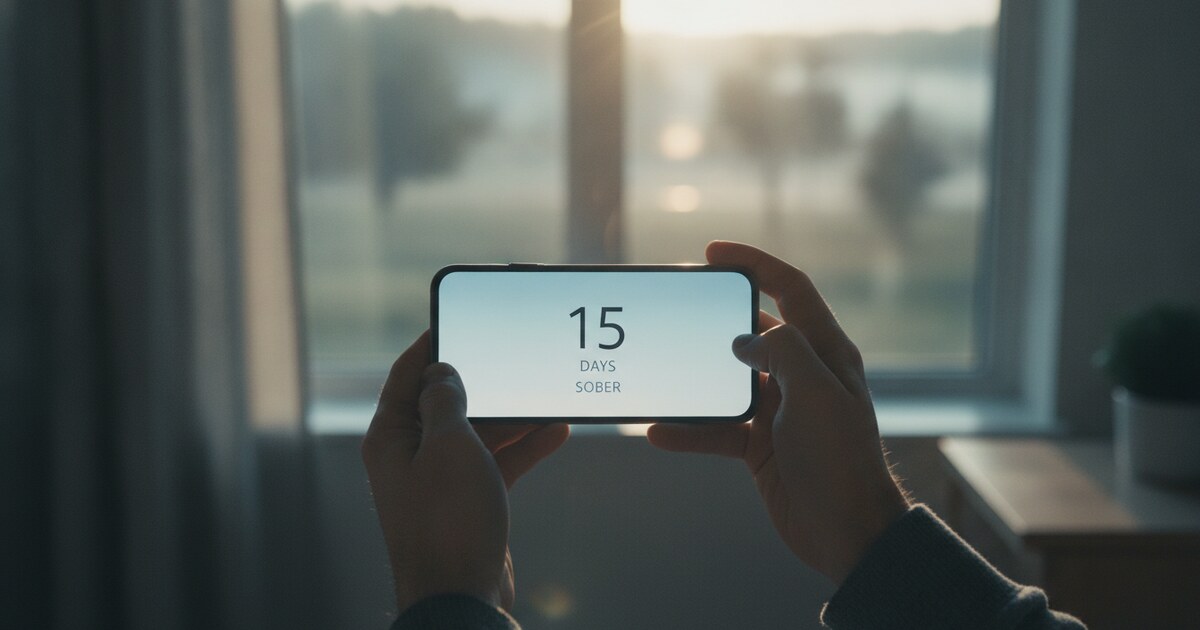
Tracking your progress is one of the most effective relapse-prevention tools available. Seeing your day count grow creates a psychological anchor: it makes an abstract commitment concrete and gives you something tangible to protect.
SobrMate’s day counter tracks exactly how many days you’ve been sober, updating in real time. The milestones feature flags the upcoming ones (the 2-week mark, the 1-month mark), so you can look forward to something specific. The money-saved tracker calculates what you haven’t spent on alcohol, which by day 15 is often a number that surprises people.
The journal with optional mood tracking lets you log how you’re actually feeling as these changes happen. Looking back at 15 days of mood entries shows you the pattern, even when the individual days felt inconsistent or hard.
SobrMate is free to download, no ads, no account required to start. The first two sobriety counters are free, so if you’re tracking more than just alcohol, you can add a second habit without paying anything.
Download SobrMate on the App Store or Google Play and start logging today.
Frequently Asked Questions
What happens to your body after 15 days of no alcohol?
After 15 days without alcohol, the acute detox phase is complete. REM sleep normalizes, liver enzymes (ALT and AST) begin dropping toward normal range, blood pressure decreases, skin hydration improves, and baseline anxiety typically reduces. Mental clarity is noticeably sharper, energy is more stable, and most people have lost 2 to 4 pounds from reduced caloric intake and water weight.
What do 2 weeks without alcohol do for your body?
Two weeks without alcohol produces measurable changes across several systems. The liver starts clearing fatty deposits that alcohol triggers. Blood pressure drops, often by 5 to 10 mmHg systolic. Sleep quality improves as REM cycles stabilize. Skin puffiness reduces from better hydration. Blood glucose regulation becomes steadier, cutting the energy crashes and cravings that drive early relapse. These changes are cumulative; week two builds directly on week one.
Does 2 weeks of no alcohol affect the liver?
Yes, meaningfully. The liver begins mobilizing fat deposits within the first two weeks of abstinence. Elevated liver enzymes, ALT and AST, that indicate alcohol-related stress start normalizing within 2 to 4 weeks in moderate to heavy drinkers, according to the British Liver Trust. The liver’s full recovery takes longer, but days 14 to 15 are when the first measurable improvements in liver function typically appear.
What happens when you don’t drink alcohol for 20 days?
At 20 days, the improvements from week two consolidate. Sleep quality is more consistently good. The liver has had nearly three weeks of recovery time. Mental clarity and mood stability are noticeably stronger, and cravings have typically reduced in both frequency and intensity. Most people find that staying sober feels less like fighting a constant urge and more like a choice they’re remaking with growing confidence.
Keep Going Past 15 Days
The 15-day no-alcohol benefits are real and measurable. Sleep improves, skin clears, the liver starts healing, blood pressure drops, and mental clarity builds. None of it happens all at once. It compounds.
If you’re at day 15, you’re past the hardest part of the physical transition. What’s ahead is more stable, more manageable, and genuinely better. SobrMate’s counter, milestones, and community are there to keep you anchored to that progress, one day at a time.
Related reading: 12 Months No Alcohol: Benefits and What Changes
Tags
About the author
Sarah MitchellHealth & Wellness Writer
Sarah is a certified health coach and freelance writer covering nutrition, mindfulness, and habit formation. She has written for Healthline and Verywell Mind, and personally practices sobriety.
More from Sarah Mitchell