National Recovery Month: A Guide for People in Recovery
September is different in the recovery community. While the rest of the calendar moves along with back-to-school schedules and the first real hints of autumn, September carries a specific weight for anyone who’s quit drinking, drugs, or other addictive behaviors. It’s National Recovery Month, the longest-running national observance dedicated to celebrating people in recovery and pushing back against the stigma that keeps others from asking for help.
If you’re in recovery, this month exists because of people like you. Understanding what it is and how to use it can turn September from just another 30 days into something that actually moves your journey forward.
National Recovery Month is an annual observance held every September in the United States. Established in 1989 by SAMHSA, it celebrates millions of Americans in recovery from substance use and mental health conditions, promotes evidence-based treatment, and works to reduce the stigma that prevents people from seeking help.
What Is National Recovery Month?
National Recovery Month started in 1989 under the Substance Abuse and Mental Health Services Administration (SAMHSA). In 2026, it reaches its 38th year. Since 2020, Faces and Voices of Recovery, a national advocacy organization run by people with lived recovery experience, has coordinated the month alongside SAMHSA.
The 2026 theme is The Great American Recovery, a framing that reflects both the scale of recovery across the country and the collective pride in how far communities have come.
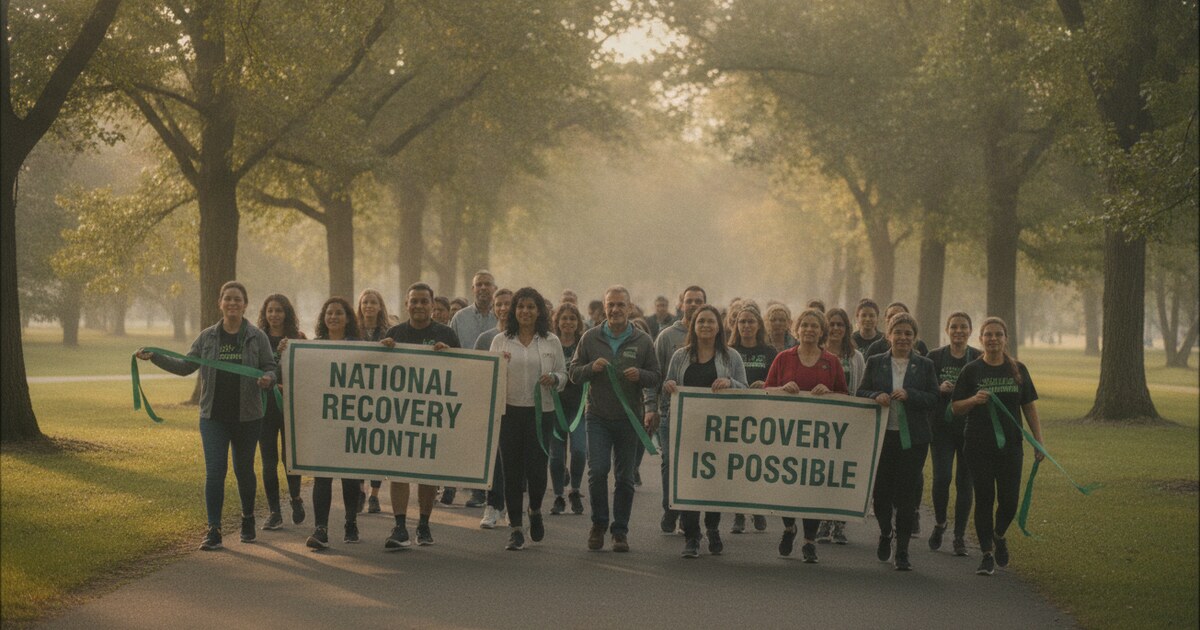
National Recovery Month runs all 30 days of September, with hundreds of recovery walks, educational events, storytelling campaigns, and community gatherings across the country. Around 20 million Americans aged 12 and older are in recovery from a substance use disorder, roughly 1 in 14 adults. Despite that scale, most people with a substance use disorder never receive treatment at all: SAMHSA’s National Survey on Drug Use and Health consistently shows that fewer than 1 in 10 people with a substance use disorder get treatment in any given year. National Recovery Month counters that treatment gap directly. The events document that treatment works, that people do recover, and that behavioral health is as legitimate as physical health. Those messages shift public culture, and shifting culture shifts outcomes. Recovery Month also puts visible pressure on insurers, employers, and policymakers to close treatment access gaps. Showing up for the month, even just online, carries real weight.
Why National Recovery Month Matters When You’re in Active Recovery
Here’s what the official messaging tends to miss: Recovery Month isn’t just for advocates and treatment providers. It’s for the person counting days.
Psychologists who study recovery consistently find that identity-based belonging, feeling like a member of a group rather than just a beneficiary of support, tends to produce stronger long-term sobriety outcomes. When millions of people publicly declare they’re in recovery during September, the default shifts. You’re no longer the exception. You’re part of something 20 million Americans are living through.
That matters more than people admit. Isolation is one of the most consistent predictors of relapse. Recovery Month creates a window where community is louder than usual, and that window is worth stepping into.
There’s also a practical side. If you’ve been private about your sobriety (which is completely valid), seeing others share their stories often lowers the barrier to sharing yours, at whatever level feels right. That openness tends to build accountability. See our guide on finding an accountability partner for sobriety for how that specific connection strengthens recovery over time.
How to Use September to Strengthen Your Sobriety
You don’t have to attend a recovery walk or post publicly to make this month count. Here are four concrete things worth doing:
Set a September milestone. This month gives you a natural 30-day container. If you’ve been in recovery for a while, use it to target a specific day count. If you’re earlier in the process, treat September 1 as a milestone start and track it deliberately. The 30, 60, and 90-day sobriety milestones lay out what changes physiologically and mentally at each checkpoint, so you know what to expect as the number climbs.
Find a local event. SAMHSA publishes an event finder at samhsa.gov each September. Recovery walks, community panels, and outdoor gatherings run in most cities. Attending even one, briefly, puts faces on the statistics and usually introduces you to people further along in their own journey.
Tell one person where you are. This doesn’t mean going public or leading a seminar. It means choosing one trusted person and letting them know you’re in recovery. Small honesty tends to ripple in ways that feel disproportionate to the size of the gesture.
Review your relapse prevention plan. Fall brings schedule changes, social pressure from gatherings, and the psychological weight of the year winding down. September is a good time to revisit relapse prevention strategies before the holiday calendar starts picking up in October.
Ways to Get Involved Beyond Your Own Journey
National Recovery Month scales past individual sobriety. If you’re in a stable place and want to contribute:
Volunteer at an event. Local treatment centers, AA and NA groups, and recovery community organizations all run Recovery Month events and welcome help. Giving back to recovery communities is consistently tied to lower personal relapse rates. It cements your identity as someone in recovery, which matters for the long haul.
Post with #RecoveryMonth. A single social media post saying you’re sober carries more weight than it looks like. Visibility is part of what reduces stigma, and other people who are struggling quietly are watching more often than you’d think.
Connect your workplace. Many companies now participate in workplace wellness awareness tied to Recovery Month. If yours doesn’t, it’s a legitimate opening to bring up mental health resources and chip away at the stigma around addiction in professional settings.
Join online communities. If in-person events aren’t realistic logistically or emotionally, online recovery communities are more active in September than at any other point in the year. It’s a good time to find a group organized around where you actually are in recovery, not just recovery in general.
And when September ends, Sober October picks up immediately, giving you a second consecutive month of community momentum heading into the hardest time of year.
How SobrMate Supports Your Recovery Month
Recovery Month is 30 days. SobrMate is built to track exactly that kind of arc.
The app’s sobriety counter gives you a real-time day count, so if you’re using September 1 as a milestone start, you’ll watch a number climb toward 30 in real time. The daily check-in logs your mood each day of the month, which means at the end of September you have a record of what worked, what was hard, and how the month actually felt for you.
For community, SobrMate’s private groups are organized by recovery stage, not random open forums. If you’re 0 to 90 days in, you’ll find others at the same point. A year or more along, there are groups for that stage too. Connecting during Recovery Month, when people are more open about their journeys, happens faster than it does at other times of year.
The app also marks milestones with badges. Hitting 30 days at the end of September gives you something concrete to see and share. Recovery Month is a good time to start if you haven’t already.
Download SobrMate free on iOS and set your September counter before the month runs out.
Frequently Asked Questions
When is National Recovery Month?
National Recovery Month runs every September 1 through September 30. It’s been an annual observance since 1989 and reaches its 38th year in 2026.
Who organizes National Recovery Month?
SAMHSA (Substance Abuse and Mental Health Services Administration) established the observance in 1989. Since 2020, Faces and Voices of Recovery, a national advocacy organization led by people in recovery, has coordinated the month alongside SAMHSA.
What is the 2026 National Recovery Month theme?
The 2026 theme is “The Great American Recovery.” It reflects the scale of recovery across the United States and highlights the millions of people who’ve rebuilt their lives from substance use and mental health challenges.
How can I find National Recovery Month events near me?
SAMHSA publishes an event finder at samhsa.gov each September. Local recovery community organizations, treatment centers, and AA and NA groups also host events that aren’t always listed officially. Searching on Facebook Events or Eventbrite with “recovery” plus your city name is usually the fastest way to find local gatherings.
Does National Recovery Month cover addiction to things other than alcohol?
Yes. Recovery Month covers recovery from all substance use disorders, including alcohol, opioids, methamphetamine, cocaine, and prescription drugs, as well as co-occurring mental health conditions. It’s not alcohol-only, which reflects the reality that many people in recovery are managing multiple substances or overlapping behavioral health challenges at once.
Tags
About the author
James CarterRecovery & Mental Health Advocate
James is a peer recovery specialist and writer with 8 years of sobriety. He contributes to addiction recovery publications and runs a weekly support newsletter for people in early recovery.
More from James Carter