Dry January Tips: How to Succeed for 31 Days
January brings the same question for millions of people: can I go 31 days without alcohol? For some, Dry January is a reset after a heavy holiday season. For others, it’s a chance to see what sobriety actually feels like before deciding whether they want more of it. Whatever your reason, the month ahead is one of the more achievable sobriety challenges out there: 31 days, a clear endpoint, and a growing community of people doing it at the same time.
Finishing the month does take some preparation. The first week is genuinely hard. Social situations get tricky. Cravings show up at odd hours. But there are patterns to all of it, and once you know them, you can plan around them.
The most effective dry January tips: tell the people closest to you about your plan, replace your usual drink with something you actually enjoy, and track each sober day so you can watch the streak build. Most people feel the real shift (better sleep, more energy, clearer thinking) somewhere around day 10 to 14.
What Happens to Your Body During Dry January
The changes during Dry January start within the first few days. They don’t always feel good at first, which is worth knowing going in.
During days 1 to 3, your liver starts processing the backlog. If you were drinking regularly, sleep often gets worse before it gets better. Alcohol suppresses REM sleep; as your brain rebalances, vivid dreams and earlier wake-ups are common. Irritability and low energy are normal in this window.
By days 7 to 10, most people notice the shift. Sleep quality improves. Blood sugar stabilizes. Energy picks up. Some people notice their skin looks clearer.
Week three is when the effects become more visible. A 2018 BMJ Open study of moderate-to-heavy drinkers who stopped for a month found insulin resistance fell by about 26%, systolic blood pressure by about 7%, and participants lost weight — partly from cutting empty calories. Many people also notice their sleep settling down by this point.
By week four, blood pressure often drops 5 to 10 points. Mental clarity tends to peak in days 25 to 30. Many people start questioning whether they want to go back to their previous drinking habits at all.
Dry January also has documented long-term effects. University of Sussex research following more than 800 Dry January participants found that six months later they were drinking on fewer days (3.3 per week, down from 4.3), drinking less when they did (7.1 units per drinking day, down from 8.6), and getting drunk less often — and people who didn’t manage the full month still saw smaller improvements. One month of changes can shift habits for the rest of the year. If you’re curious about the full timeline of what happens when you quit drinking, the changes extend well beyond month one.
7 Dry January Tips That Actually Work
The people who finish Dry January don’t usually rely on willpower alone. They set up conditions that make the month easier to get through.
1. Tell someone your plan. Saying it out loud creates accountability. You don’t need to announce it publicly; just tell one or two people who will check in with you. The social expectation alone helps.
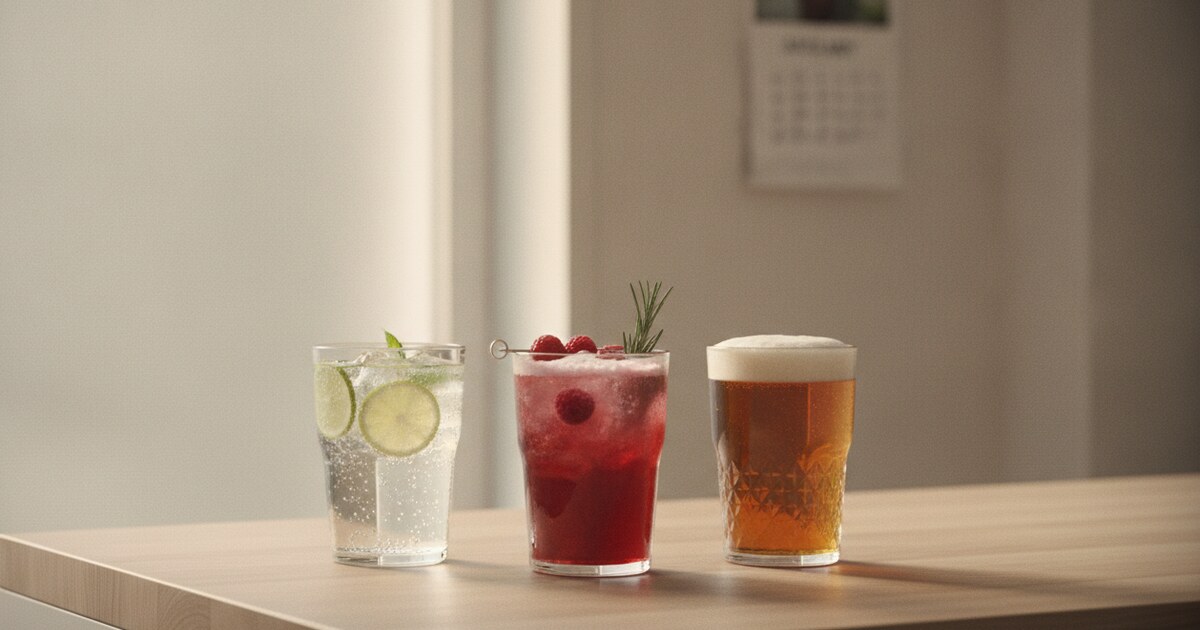
2. Stock drinks you actually like. If you replace wine with sparkling water you find boring, every evening becomes a comparison and a sacrifice. Find an NA beer, a mocktail, or a drink you’re genuinely curious about. The goal is something you reach for, not something you tolerate. Our roundup of non-alcoholic drink alternatives covers options across every category.
3. Prepare a simple refusal. “I’m doing Dry January” is a complete sentence. You don’t owe anyone an explanation. Rehearsing it once makes it much easier to say in the moment when someone pushes a drink toward you.
4. Change your routine for the first two weeks. Cravings attach to cues: the time you usually pour a drink, the couch you sit on, the show you watch. Breaking the association even temporarily makes the first two weeks significantly easier. Different couch, different time, different activity.
5. Track your streak. Watching the number grow is genuinely motivating. Pair it with a savings estimate: the average American spends $700 to $1,000 per year on alcohol, so a month without it adds up faster than most people expect.
6. Have a craving plan. The urge-surfing technique works well here. When a craving hits, observe it for 10 to 15 minutes instead of fighting it. Most cravings peak and pass within that window without any action needed. More strategies for managing cravings in recovery apply just as well to a Dry January month.
7. Know your actual reason. “I want to see what a month sober feels like” is a reason. “My doctor mentioned my liver enzymes” is a reason. “I want to sleep better” is a reason. People who finish the month usually have a specific why, not a vague one. Write it down and put it somewhere you’ll see it on a hard day.
The Hardest Days (and When Things Get Easier)
Dry January has a predictable difficulty curve. Knowing it ahead of time makes the hard parts less surprising.
Days 2 through 4 are physiologically the toughest. Your brain’s GABA and glutamate systems, which alcohol disrupts, take several days to rebalance. Headaches, irritability, and disrupted sleep are common in this window; they’re temporary, normal signs of your body adjusting.
The first weekend is socially the hardest. Weekend evenings concentrate exactly the situations where drinking is the assumed default: dinners, social gatherings, relaxing at home after a week of work. Having a plan before you get into those situations (what you’ll drink, what you’ll say) matters more than anything you do in the moment.
Around days 10 to 14, something shifts for most people. The cravings quiet. Sleep quality improves noticeably. Many people describe this as the point where the month starts to feel possible instead of just difficult.
After week three, most people describe their new habits as feeling normal. The hard part is largely over. The final week tends to feel like maintaining something you’ve built rather than fighting through something difficult.
If you slip up (one drink, one night), the month isn’t finished. Research doesn’t suggest that a single lapse cancels the benefits of the days before it or after it. Reset your count, don’t catastrophize, and keep going. Dry January isn’t a pass/fail exam.
How SobrMate Helps During Dry January
Dry January is easier with something concrete to track. SobrMate’s sobriety counter shows your streak in real time. Its savings calculator shows the money you’ve saved since your quit date; for a full month of not drinking, that number tends to be more motivating than most people expect.
The journal, where you can log your mood each day, is particularly useful during the month. Logging how you feel each day builds a record of the actual changes: the rough first week, the shift around day 10, the mental clarity by week four. That record helps you understand what the month is doing, not just get through it.
If you slip up, SobrMate handles it without drama. You can reset your counter without losing your history. The app tracks when you started, when you reset, and what your current streak is. Recovery isn’t a straight line, and the app treats it that way.
The Alcohol community lets you connect with others who are cutting out drinking too: people in their first sober month, people who’ve completed Dry January before, people who started with the challenge and kept going. That community can make a real difference on day 3 or day 12 when things feel hard.
SobrMate also lets you run a second counter free (more with Premium), so if Dry January is part of a broader reset (cutting back on anything else alongside alcohol), you can track both in one place.
Frequently Asked Questions
What is the hardest day of Dry January?
Days 2 through 4 are typically the hardest physically, as the brain rebalances neurotransmitter systems that alcohol disrupts. The first Saturday tends to be the hardest socially, since it’s the first weekend situation where drinking is the default. Most people report a noticeable improvement around day 10 to 14, which is when cravings soften and sleep quality picks up.
What happens to your body when you stop drinking?
In the first week, the liver starts clearing backlog, sleep may be disrupted as REM cycles normalize, and irritability is common. By week two, blood sugar stabilizes and energy improves. By weeks three and four, sleep usually improves, blood pressure often comes down, and many people notice weight loss and clearer skin. The bigger payoff is often the habit shift: University of Sussex research found participants were still drinking less six months later.
What is the 1/2/3 rule for drinking?
The 1/2/3 rule is a moderation framework: no more than 1 drink per occasion, no more than 2 times per week, and no more than 3 drinks per week. It’s a guideline for moderate drinking, not a clinical standard. Dry January sets all three numbers to zero for the month.
What should I do if I slip up during Dry January?
Reset your count and keep going. One drink doesn’t erase the benefits of the days before it or block the benefits ahead. Dry January works by building 30 days of sober habits; a single night doesn’t undo that. Don’t use it as a reason to abandon the month.
Is Dry January worth it if I’m a light drinker?
Yes. Research shows benefits at all drinking levels. Even moderate drinkers report improved sleep, energy, and mood after 30 days of abstinence. The month also gives you concrete information about your relationship with alcohol (how much you think about it, when cravings show up, how social situations feel), which is worth knowing regardless of where you land on the spectrum.
If you want something to help you track the month (your streak, your mood, your savings), SobrMate is built for exactly this. Download it and start your Dry January counter today.
Tags
About the author
Sarah MitchellHealth & Wellness Writer
Sarah is a certified health coach and freelance writer covering nutrition, mindfulness, and habit formation. She has written for Healthline and Verywell Mind, and personally practices sobriety.
More from Sarah Mitchell