Non-Alcoholic Drink Alternatives That Actually Taste Good
Stepping into sobriety often means one thing hits hard: you don’t know what to drink anymore.
At parties, dinners, and weddings, alcohol is everywhere. Most people have never had to think about alternatives. When you stop drinking, every social situation suddenly comes with a decision. And “sparkling water with lime” gets old fast.
The good news is that non-alcoholic drink alternatives have gotten genuinely good in the last few years. Hundreds of options now exist across every category: beer, wine, spirits, cocktails, and functional drinks. Some taste real. Some actually taste great. This guide covers what’s worth trying, what to order when you’re out, and a few drinks that can help when cravings hit.
The best non-alcoholic drink alternatives are NA beer (Athletic Brewing, Heineken 0.0), dealcoholized wine (Ariel, Fre), spirit alternatives (Seedlip, Monday, Lyre’s), and functional drinks with adaptogens. What works depends on what you’re replacing: the ritual, the taste, or the social prop. Most people in recovery start with NA beer, then build from there.
Non-Alcoholic Beer, Wine, and Spirits
The closest thing to drinking without drinking.
NA beer has become good enough that plenty of people drink it by choice. Athletic Brewing leads with 30+ styles covering IPAs, stouts, wheat beers, and sours. Heineken 0.0 and Clausthaler have wide distribution. These taste like beer because they start as beer: the alcohol gets stripped out after brewing, not skipped from the beginning. The result is a real beer flavor profile.
NA wine is harder to nail. Most dealcoholized wines lose body and texture in the process. Ariel Chardonnay and Fre Brut Cuvée are among the better options available. If wine was your go-to drink, expect some trial and error before you find one that works.
Spirit alternatives like Seedlip, Monday Whiskey, and Lyre’s were built to be mixed like spirits. None of them taste exactly like gin or whiskey on their own. But in a properly made mocktail, they add depth and complexity you won’t get from juice and soda alone. That matters when everyone around you has a cocktail and you want something that feels intentional in your hand.
The non-alcoholic drinks market grew by 31% between 2020 and 2025, driven largely by the sober curious movement and people in long-term recovery looking for better social options. NA beer is now one of the fastest-growing segments in craft brewing. Athletic Brewing went from its founding in 2017 to becoming one of the top 50 US craft breweries by 2023, built almost entirely on its alcohol-free lineup. Spirit alternatives have matured alongside this shift: Seedlip launched in 2015 and now sells in over 40 countries, while Monday and Lyre’s offer category-specific replacements for whiskey, gin, and rum. For people in recovery, these options provide the social and sensory parts of drinking (a glass to hold, a ritual, flavors that go beyond sweet) without the alcohol. That’s a gap that sparkling water simply doesn’t fill.
Non-Alcoholic Mocktails to Make at Home
You don’t need a full bar kit to make something good.
A few combinations that actually hold up:
Citrus soda base. Sparkling water, fresh lime juice, a splash of grapefruit juice, and a pinch of salt. The salt changes how your palate reads the bitterness. It’s the difference between flat citrus soda and something genuinely refreshing.
Ginger and honey. Hot or sparkling water, fresh grated ginger (not powder), honey, and lemon. Drink it hot in winter, cold in summer. It’s simple and more satisfying than it sounds.
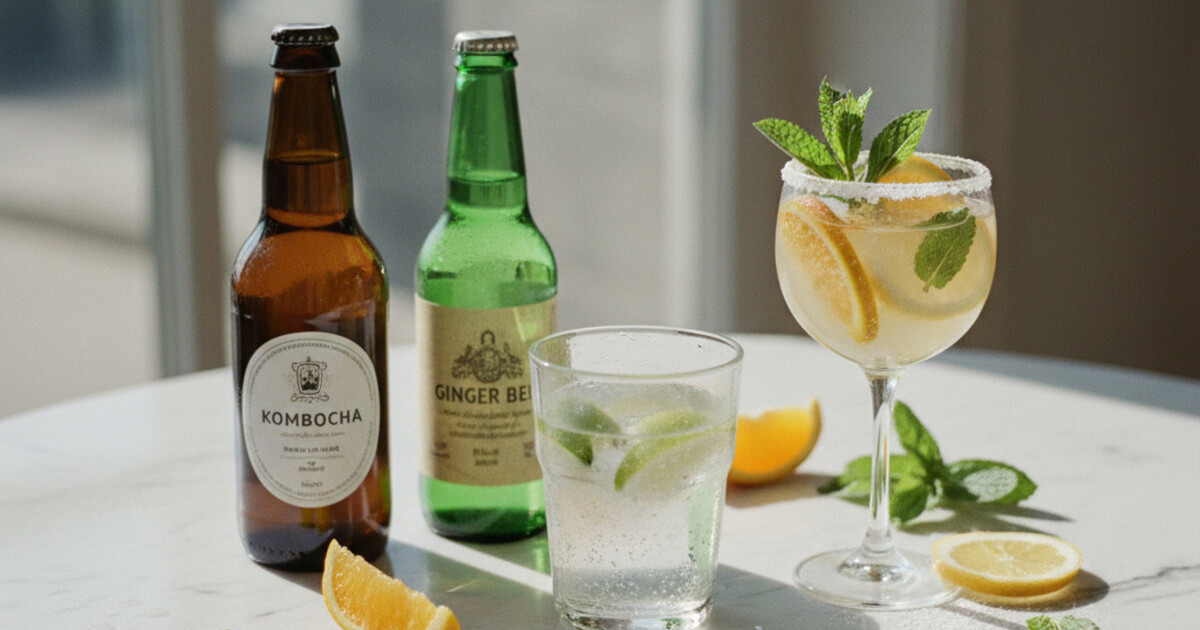
Seedlip mule. One part Seedlip Spice 94, three parts ginger beer, a squeeze of lime over ice. That’s it. It tastes like an actual cocktail. Most people can’t identify what’s missing on first sip.
Shrub drinks. A shrub is a drinking vinegar made with fruit, sugar, and apple cider vinegar. They sound odd but taste complex and tart when mixed with sparkling water. Pok Pok Som is a widely available brand worth trying.
One practical thing: mix your drink before you walk into a social event. Having something in your hand before you arrive removes most of the awkwardness. People rarely ask what you’re drinking if you’re already holding something that looks intentional.
For more on navigating events without drinking, our guide to staying sober at social events covers what works in practice.
What to Order at Bars and Restaurants
Most places now have better options than you’d expect.
Ask about mocktails. Even bars without a dedicated NA menu can usually put a few things together off-menu. A good bartender can make something decent with soda water, citrus, and a garnish. Some bars have invested seriously in their NA programs — those are worth finding.
Go for complexity. Club soda with lime works, but ginger beer on ice, a sparkling Italian soda, or a quality lemonade gives you something more interesting to nurse through an evening.
Virgin cocktails work fine. Virgin mojito, Shirley Temple, Arnold Palmer — on most menus, widely available, and they taste good. They’re not exotic, but that’s often the point.
A few options that show up almost everywhere:
- Ginger beer on ice with lime
- San Pellegrino blood orange or limonata
- Virgin mojito (lime, mint, club soda, sugar)
- Sparkling grape juice at restaurants with wine service
- Fresh lemonade, especially if they add herbs
The sober curious movement has pushed bars and restaurants to treat their NA offerings more seriously. For context on why this shift happened, our piece on the sober curious movement covers the broader picture.
Drinks That Can Help With Cravings
Some drinks do more than just replace the ritual.
Kombucha has a fermented tartness that some people find satisfying when they’d normally reach for a beer. The flavor profile is closer to a sour ale than a soda. The probiotic content is a bonus.
Adaptogen drinks like Recess, Kin Euphorics, and Aplós contain ashwagandha, L-theanine, or CBD. Some people find them genuinely calming, particularly for the anxiety and stress side of cravings. They’re not a treatment, but if one takes the edge off a difficult evening, that’s worth something.
Kava deserves its own mention. Traditionally consumed in the Pacific Islands, kava produces mild calming effects and is used communally. Kava bars have opened in many cities and function as intentionally sober social spaces. The taste takes some adjustment (earthy, slightly numbing on the lips), but the setting is a real alternative to a regular bar.
Hot drinks work better than most people expect. A good cup of tea or coffee scratches the ritual itch that often drives cravings more than the taste of alcohol does. If your drinking had a timing pattern (a drink to unwind after work, a glass with dinner), replacing the time slot with a deliberate hot drink ritual helps more than replacing nothing.
How SobrMate Helps Track Your Progress
Finding drinks you actually enjoy is part of building a new life. Tracking the bigger picture is what keeps the momentum going.
SobrMate’s daily check-ins let you log how you’re feeling alongside your sobriety counter. Over weeks, patterns emerge: which days are harder, which habits help, and where the rough spots tend to land. That data is actually useful.
The savings calculator shows what you’ve stopped spending on alcohol. Someone who drank $30-50 per week saves $1,560-2,600 per year by stopping. Some people put that toward premium NA drinks and find the trade-off genuinely satisfying.
SobrMate also tracks multiple addictions at once. If you’re working on more than one thing, the counters run side by side. Each one preserves your history if you reset, because recovery isn’t linear.
Download SobrMate free at sobrmate.app and start logging from day one.
Frequently Asked Questions
What’s the best non-alcoholic drink for early recovery? Start with NA beer or sparkling water with citrus. Both are easy to hold in social settings without drawing attention. Athletic Brewing’s NA beers are widely available and taste like beer. As you get comfortable, explore spirit alternatives and mocktails.
Do NA beers contain any alcohol at all? Most NA beers contain up to 0.5% ABV, which is comparable to some fruit juices and kombucha. Dealcoholized wines vary by brand. Most spirit alternatives like Seedlip are 0.0% ABV. For anyone in early recovery, talk to your support network about what level feels right for you.
Can adaptogen drinks help with anxiety in recovery? Some people find them calming, particularly for social anxiety and stress-driven cravings. The evidence on specific ingredients like ashwagandha and L-theanine is still developing. Worth trying if you’re curious, but they’re a complement to recovery work, not a replacement.
Where can I find non-alcoholic beers and spirits? Athletic Brewing is stocked in most grocery stores. Seedlip, Monday, and Lyre’s are available online and at specialty retailers. Total Wine and Drizly carry growing NA sections that have expanded significantly in the past 2 years.
Conclusion
Non-alcoholic drink alternatives have moved well past “just water.” There are genuine options across every category now: NA beer, dealcoholized wine, spirit alternatives, mocktails, and functional drinks that actually do something.
Start with what’s accessible, find what you enjoy, and build from there. Having a drink you look forward to makes staying sober at social events a lot easier than white-knuckling through with nothing in your hand.
SobrMate can help you track the progress behind the scenes. Log your daily check-ins, watch your day count grow, and see what you’re saving. Free to download at sobrmate.app.