Sobriety Gift Ideas: Best Gifts for People in Recovery
Finding the right sobriety gift ideas isn’t like regular gift shopping. You want to show you care without making the person feel defined by their recovery. You want something meaningful, but you’re not sure what actually helps.
People who’ve been through recovery tend to want the same things: to feel seen, supported, and equipped with tools that make staying sober a little easier. This list covers all three, organized by what someone needs at different stages of the journey.
The best sobriety gifts acknowledge someone’s progress without reducing them to their recovery. A 30-day milestone keepsake marks real effort. A self-care kit says you deserve comfort. A good daily tracking app helps every single day. Choose something personal and practical, then pair it with a genuine note about how far they’ve come. No speech required.
What Makes a Good Sobriety Gift?
The worst sobriety gifts land at one of two extremes: so heavy they feel clinical, or so generic they feel like an afterthought.
The sweet spot is personal and practical.
Choosing the right sobriety gift depends on understanding what recovery actually demands. Recovery from alcohol or substance use is active daily work: logging moods, managing cravings, rebuilding social routines, and marking milestones that represent real progress. The most meaningful gifts address at least one of these needs directly. For early recovery (the first 30-90 days), practical items like sleep aids, stress-reduction tools, and structured journals provide real support when the body and brain are still recalibrating. For longer sobriety, milestone keepsakes and community experiences tend to carry more weight. Studies on behavior change consistently show that external acknowledgment of progress increases motivation to continue. People in recovery who feel supported by friends and family are significantly more likely to maintain sobriety at the 6-month and 12-month marks. A thoughtful gift serves as a physical reminder that someone is paying attention, and that visibility matters more than the price tag.
A few things to avoid:
- Anything with alcohol imagery (even “just for decoration”)
- Gifts that frame the person as broken or in need of fixing
- Experiences centered around drinking
One more thing: recovery isn’t linear. Someone can have 3 years of sobriety and still have a brutal week. The best gifts work at any stage, not just during the wins.
Milestone Gifts That Mark Real Progress
Milestones matter in sobriety. What happens at 30, 60, and 90 days in recovery covers the physical and emotional shifts at each stage. Each benchmark carries weight, and marking it with something physical makes it real.
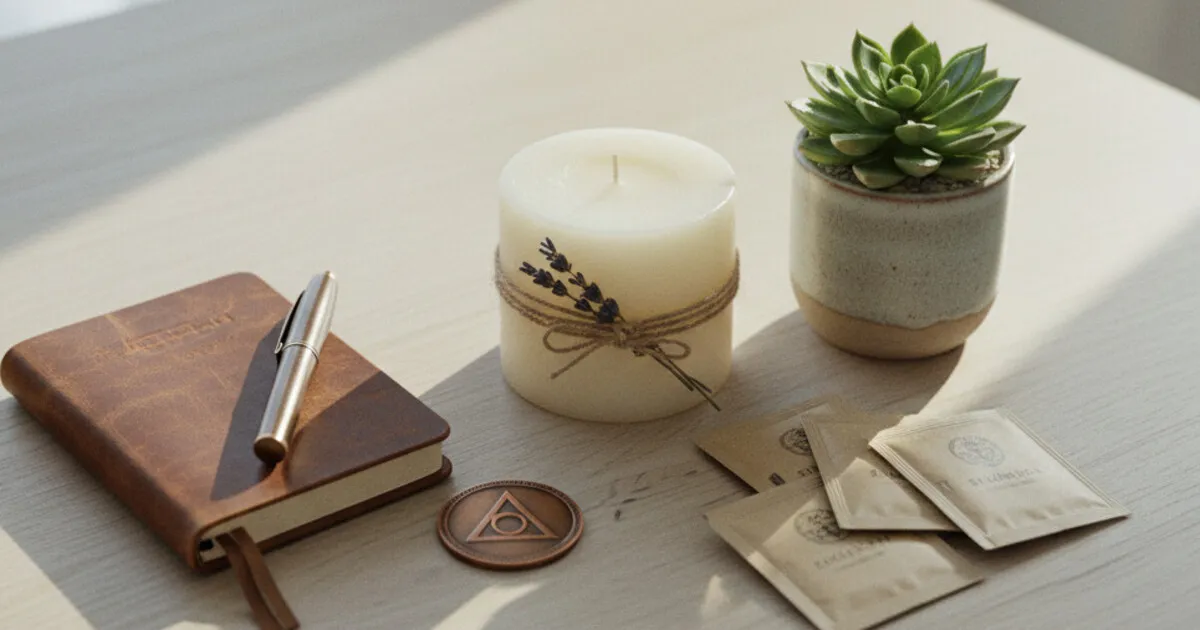
Sobriety chips and coins. These originated in 12-step programs and are still widely carried years into recovery. They’re small enough to keep in a pocket daily. You can find standard chip sets on Etsy or Amazon for $10-20, or order custom-engraved ones for around $30-50.
Custom date jewelry. A necklace or bracelet with someone’s sobriety date. Several Etsy shops specialize in recovery jewelry, and it works as a daily reminder without being conspicuous.
A framed print with their sobriety date. A minimalist print with the date and a short message. Costs $20-40 and lands as genuinely personal.
A personalized journal. A notebook with their sobriety date stamped on the cover works as both a daily tool and a keepsake.
Matching the gift to the specific milestone takes it from generic to meaningful. Saying “you made it to 6 months” before handing something over is more powerful than any wrapping.
Daily Support Gifts They’ll Actually Use
The gifts people reach for every day are the ones that matter most 6 months after the occasion.
Recovery journals with prompts. A blank journal works, but a guided one with recovery-focused prompts is easier to start with. Morning prompts around gratitude, mood, and daily intentions are common. If the person doesn’t already journal, a guided version is more accessible.
Books. A few that come up consistently in recovery communities:
- This Naked Mind by Annie Grace (focused on alcohol, reads fast)
- In the Realm of Hungry Ghosts by Dr. Gabor Maté (addiction science made accessible)
- Quit Like a Woman by Holly Whitaker
- The Body Keeps the Score by Bessel van der Kolk (trauma and recovery)
Self-care kits. Early recovery is physically rough. Sleep disruptions, mood swings, and stress spikes are all common in the first 90 days. A kit built around rest has real practical value: lavender essential oil, a sleep mask, magnesium glycinate supplements (studied for sleep quality improvement), herbal tea, and a good journal.
Exercise gear. Physical activity is one of the most research-backed supports for sobriety maintenance. A yoga mat, resistance bands, or a gym bag signals that you’re supporting their whole health, not just the recovery piece.
A water bottle they’ll love. Sounds simple. But staying hydrated is a consistent recommendation in early recovery, and a high-quality bottle with their name on it gets used daily.
Experiences That Replace Old Routines
Something recovery books don’t always address: weekends get strange in early sobriety. Social routines built around drinking get stripped away, and building new ones takes time. A gifted experience fills that gap directly.
Good options include:
- A cooking class (hands-on, social, and completely sober)
- Pottery or ceramics workshop
- A concert or live event for something they’re genuinely into
- A spa day or massage
- A national park annual pass (around $80, lasts all year; outdoor time consistently shows up in research on improved mood and reduced cravings in recovery populations)
- A guided hiking trip or photography class
Pick something the person would actually enjoy, not something that feels “recovery appropriate.” They’re a whole person. A cooking class on Saturday night isn’t a recovery activity. It’s just a good Saturday, which is exactly what someone building a new life needs more of.
How SobrMate Supports Recovery Every Day
If you want a sobriety gift that pays off over months rather than days, a good tracking app is worth recommending. It costs nothing, lives on their phone, and works every day.
SobrMate is a free iOS app built specifically for recovery. Here’s what makes it a solid recommendation:
Multi-addiction tracking. You can run counters for alcohol, drugs, smoking, or other behaviors simultaneously. This matters for anyone managing more than one substance or behavior at the same time.
Daily check-ins with mood logging. A quick record of how the day went, without requiring a full journal entry. Patterns show up over time.
Private community groups by recovery stage. The groups are organized by where someone is in their journey, so you’re talking to people who are at a similar point, not a general forum with everyone at different stages.
Milestone badges. The app marks 30 days, 60 days, 90 days, and beyond with visible celebrations. Progress feels real when it’s tracked.
Savings calculator. It shows how much money has been saved since quitting. Watching that number build is motivating in a concrete, specific way.
Core features are free. No subscription required for tracking or community access.
Download at sobrmate.app.
How to Give a Sobriety Gift Without Making It Weird
Giving a sobriety gift well comes down to how you frame it.
A few things that help:
Skip the speech. Hand over the gift, say “I’m proud of you and wanted to mark this,” and let them respond. You don’t need to summarize everything you know about recovery.
Match the milestone. A 30-day gift hits differently than a 1-year gift. If you know where they are, name it specifically. “You hit 6 months” is a better opener than a generic card.
Ask what they need. If you’re close to someone in early recovery, “what would actually help right now?” tells you more than any gift guide. Some people want distraction. Some want structure. Some want comfort. Asking isn’t awkward. It’s specific.
It also helps to understand the challenges your person is navigating. Relapse prevention strategies that actually hold up gives practical context on what makes recovery hard day to day.
Frequently Asked Questions
What’s a good sobriety gift for someone who just hit 30 days?
A 30-day sobriety chip is the classic choice. It’s small, portable, and carries a lot of meaning in recovery communities. A self-care kit with sleep-focused items also works well for early recovery, when rest and stress management matter most.
Can I give a gift card as a sobriety gift?
A gift card works if it’s specific. A spa or wellness gift card, a bookstore card, or a restaurant they love signals more thought than a generic prepaid card. Pair it with a handwritten note about what you appreciate about them.
What are good sobriety apps to recommend?
SobrMate is free and covers the core needs: day counting, mood tracking, milestone badges, and private community groups organized by recovery stage. For a comparison of the top options, the best sobriety apps of 2026 breaks down what each one does well.
Is it okay to acknowledge someone’s sobriety, or does it feel intrusive?
For most people in recovery, acknowledgment feels good. They’ve done hard work and they know it. What feels intrusive is when sobriety is the only thing you see about them. Lead with the gift. Thoughtful giving says more than anything you could add in words.
What if I don’t know what milestone they’re at?
Pick something that works at any stage: a journal, a book, an experience, or a self-care kit. These don’t require knowing someone’s exact day count to land well.
The Bottom Line
The best sobriety gifts share one quality: they feel like the giver thought about the person, not just the recovery.
A milestone keepsake, a book they’d genuinely want, a full spa day, or a daily tracking app. Any of these lands when it comes with genuine acknowledgment.
If you’re looking for a free everyday tool to recommend, SobrMate covers the basics without a subscription: daily check-ins, milestone badges, mood tracking, and community groups sorted by recovery stage. Download it at sobrmate.app.
Tags
About the author
James CarterRecovery & Mental Health Advocate
James is a peer recovery specialist and writer with 8 years of sobriety. He contributes to addiction recovery publications and runs a weekly support newsletter for people in early recovery.
More from James Carter